The Feature Trap: Why Most Fundraising Tools are Over-engineered yet under performing
Fundraising tools keep adding features until they solve everything poorly. Why most bloat, and what founders actually need instead.
There is a pattern that repeats itself across every category of productivity software, and fundraising tools are no exception to it.
A tool gets built to solve a real problem. It works. People adopt it. Then, under pressure to grow, retain users, and justify pricing, the product team adds features. Then more features. Then a dashboard to manage the features. Then an integration layer so the features can talk to other features. The tool that once solved one thing clearly now solves fifteen things poorly — and the original problem, the reason anyone showed up in the first place, quietly gets worse.
This is the feature trap. And in the world of early-stage fundraising, it is everywhere.
The Illusion of Completeness
Walk through the feature list of most fundraising or investor relations tools and the breadth is genuinely impressive. CRM pipelines. Document analytics. Email tracking. Data rooms. Investor updates. Cap table management. Pipeline scoring. Automated outreach sequences. Meeting schedulers. AI summaries.
The implicit promise is that if you adopt the full stack, you’ll have control over your fundraising process. You’ll have visibility. You’ll stop guessing.
But most founders who have actually used these tools at depth will tell you something different. The tools are comprehensive in the way that a Swiss Army knife is comprehensive — technically capable of many things, genuinely good at almost none of them. You end up with a feature set that covers everything and a workflow that still relies on instinct.
This isn’t a coincidence. It’s a structural outcome of how these products are built.
When the Tool Becomes the Work
The fundamental problem with over-engineered fundraising tools is that they shift the founder’s attention from fundraising to tool management.
Consider what happens when a founder adopts a full-featured fundraising CRM. Before the first investor conversation, they need to configure the pipeline stages. Define custom fields. Set up integrations with email and calendar. Decide on tagging conventions. Import existing contacts. Figure out where document sharing lives relative to the deal pipeline. Learn the difference between a “contact” and a “lead” and an “investor” in the data model.
This is hours of work before any actual fundraising has happened. And the overhead doesn’t stop at setup. Every interaction generates a data entry decision: Do I log this as a meeting or a call? Do I move this to “Due Diligence” or keep it in “Interested”? Did the associate’s email constitute a meaningful touchpoint or is it noise?
The tool demands ongoing maintenance to stay accurate. And an inaccurate tool is worse than no tool at all, because it gives you false confidence in your own data.
Founders raising their first round don’t need a system this complex. They need clarity on a small number of things: who has seen their deck, who is engaged, who has gone cold, and what the next action is. Everything beyond that is overhead.
The Signal-to-Noise Problem
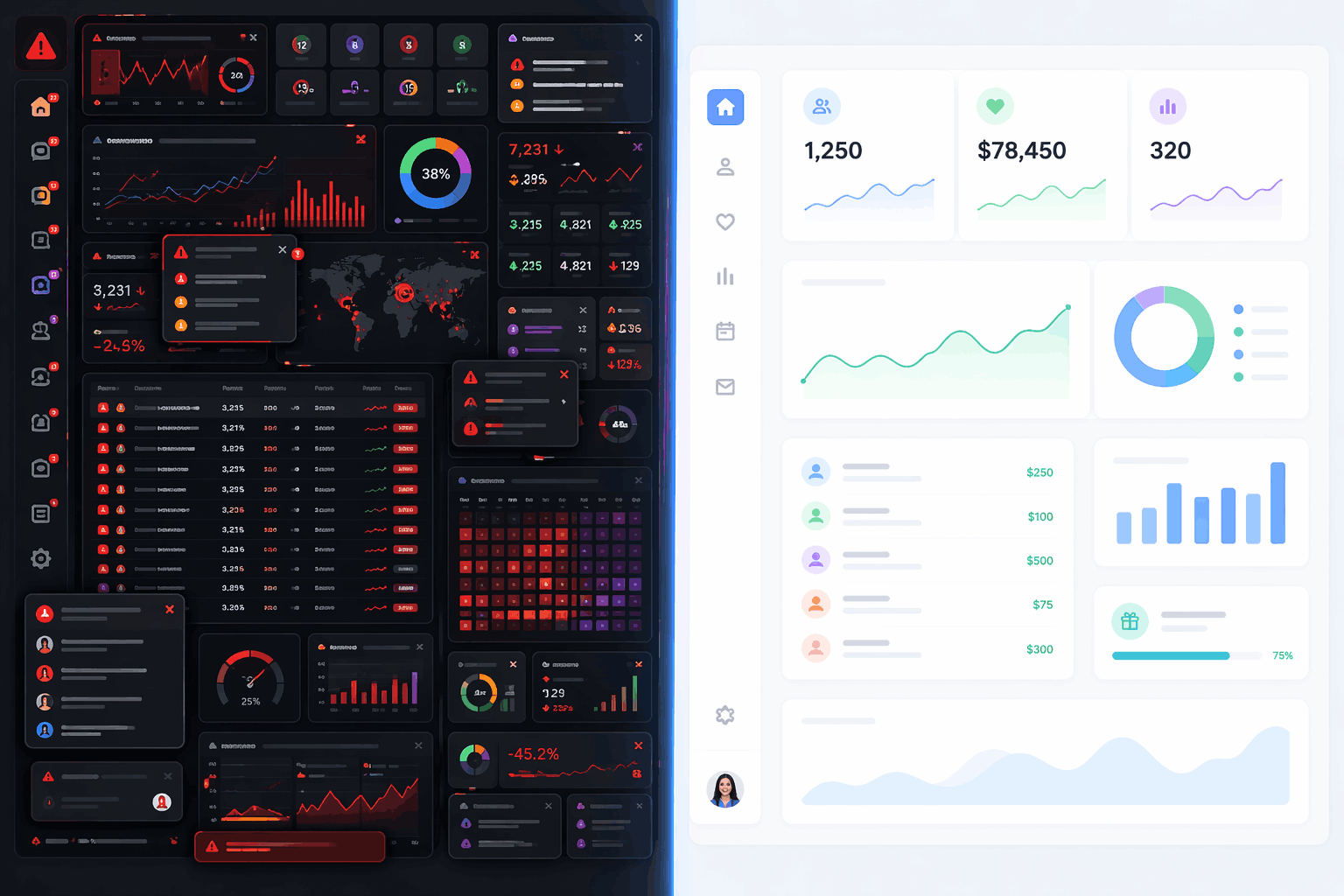
More features generate more data. More data creates more noise. And in fundraising, noise is actively harmful.
When you’re managing a raise across 80 investors with a tool that tracks 40 data points per contact, you will eventually face a decision that the data cannot resolve for you. You have an investor who opened your deck twice, replied once, attended a call, and then went quiet for 12 days. Your pipeline tool shows them as “Active.” Your email tracker shows no opens in the last week. Your meeting notes say “seemed genuinely interested, mentioned talking to partners.”
Are they warm or cold? Should you follow up today or wait?
The tool cannot answer this. What it can do is give you the illusion that you have enough data to answer it yourself — when in reality you are doing the same intuitive guess you would have made without any of it, just with more cognitive overhead getting there.
The problem isn’t a lack of data. It’s a lack of the right data, surfaced at the right moment, clearly enough to act on. Most fundraising tools optimize for data collection. Very few optimize for decision clarity.
Why This Keeps Happening
It’s worth understanding why the feature trap exists in the first place, because it isn’t the result of bad product thinking. It’s the result of rational incentives applied to the wrong problem.
Fundraising tools are often built by teams who come from enterprise SaaS backgrounds, where feature depth signals credibility, where procurement decisions favor comprehensive platforms, and where the buyer and the user are often different people. Enterprise procurement rewards breadth. It rewards integrations. It rewards the ability to check boxes on a vendor evaluation form.
Early-stage founders are not enterprise buyers. They are one person, or two, running a process that will last three to six months, under significant time pressure, with no dedicated operations support. They need a tool that works immediately, adds no maintenance burden, and tells them what to do next.
The mismatch between how these tools are built and who actually needs them most is the core of the problem.
The Cost of Complexity
The feature trap has a real cost, and it isn’t just time.
When a founder spends cognitive energy managing their fundraising tool, they are spending cognitive energy that could go toward the raise itself — toward relationship building, toward refining the narrative, toward understanding what specific objections keep surfacing and why. Fundraising is fundamentally a persuasion and relationship problem. No amount of pipeline infrastructure changes that.
There is also a subtler cost: false confidence. A well-configured fundraising CRM can feel like control. The pipeline has stages. The contacts are tagged. The documents are tracked. But if the underlying workflow is still built on guesswork — if you still don’t actually know which investors are close and which ones have quietly moved on — the appearance of a system is worse than no system, because it stops you from feeling the urgency to fix the real problem.
Complexity doesn’t solve fundraising. Clarity does.
What Actually Matters
If you strip away everything a fundraising tool could theoretically do and ask what would meaningfully change the outcome of a raise, the list is short.
You need to know whether an investor has engaged with your materials — not just opened them, but actually spent time with them. You need a way to keep your deck current without managing multiple versions across multiple inboxes. You need a simple record of where each conversation stands and what the next step is. And you need enough friction reduction in the sharing process that you can move quickly without slipping into disorganization.
That’s roughly it. Everything else — the scoring algorithms, the automated sequences, the AI-generated summaries, the deep CRM integrations — is either solving for scale you don’t yet have or adding complexity that makes the core workflow harder.
The best fundraising tool is the one that disappears into the background and lets the actual work happen. Most of the tools that exist today have not figured out how to do that. They have figured out how to look comprehensive. Those are not the same thing, and confusing them is exactly how the feature trap closes around you.