Why DocSend Stopped Innovating (And What That Means for Your Raise)
DocSend biggest 2026 update was a diligence tracker, not AI. Here is why Dropbox priorities left it behind — and what to look for in an AI-native pitch deck tool instead.

DocSend’s headline update for 2026 was a Diligence Tracker — a task management layer added inside its Advanced Data Rooms tier. It’s a genuinely useful feature if you’re deep in structured due diligence. What it isn’t is AI. And that gap says more about where DocSend sits inside Dropbox’s priorities than any single feature ever could.
Where Dropbox’s AI investment actually went
Dropbox acquired DocSend in 2021 for $165 million. Since then, Dropbox’s own AI energy has gone almost entirely into a separate product: Dash, an AI-powered universal search and knowledge workspace, first launched in 2023 and expanded significantly through 2025 and into 2026. Dash has shipped a generative “Answers” feature that synthesizes information across a user’s connected apps, an AI model selector letting users choose between multiple models, in-product web search, and — as of mid-2026 — a Model Context Protocol server that connects Dash’s AI search directly into tools like Claude and Cursor. Dropbox’s own product updates page makes the priority clear: Dash gets the AI headlines, and DocSend shows up as a smaller line item alongside it.
That’s not a criticism of Dash — it’s a legitimately ambitious product. It’s a reasonable read of company strategy: the acquired document-tracking tool isn’t where the AI investment is happening. The company’s innovation budget has a clear center of gravity, and it isn’t DocSend.
Why that matters more than a missing feature
A tool that adds AI as an afterthought and one that’s built AI-native from day one behave differently in ways that go beyond a feature checklist:
| AI added later | AI-native from day one | |
|---|---|---|
| How AI works | Summarization or search bolted onto a workflow designed years before generative AI | Analysis is part of the workflow itself |
| When analysis happens | Only when you ask for it | The moment a deck is uploaded |
| What the founder does | Reads raw analytics tables and cross-references them by hand | Gets synthesized engagement patterns automatically |
| Where it fits | Structurally separate from the core product | Designed around the capability from the start |
A bolted-on AI feature typically means summarization or search added on top of a workflow designed years before generative AI existed — useful, but structurally separate from how the core product actually works. AI-native means the analysis is part of the workflow itself: a deck gets summarized the moment it’s uploaded, engagement patterns get synthesized automatically instead of requiring you to read a raw analytics table, because the product was designed around that capability rather than retrofitted to include it.
For a founder mid-raise, this isn’t an abstract product philosophy question. It’s about which tool actually saves you time during the specific weeks when your attention is stretched thinnest — pulling together what an investor actually cared about across three separate documents, or manually cross-referencing view data yourself because the tool wasn’t built to do that synthesis for you.
What to actually look for
Not “does it have AI” as a checkbox — plenty of tools bolt on a chat window and call it done. The real question is whether AI is doing work that actually matters to your specific job:
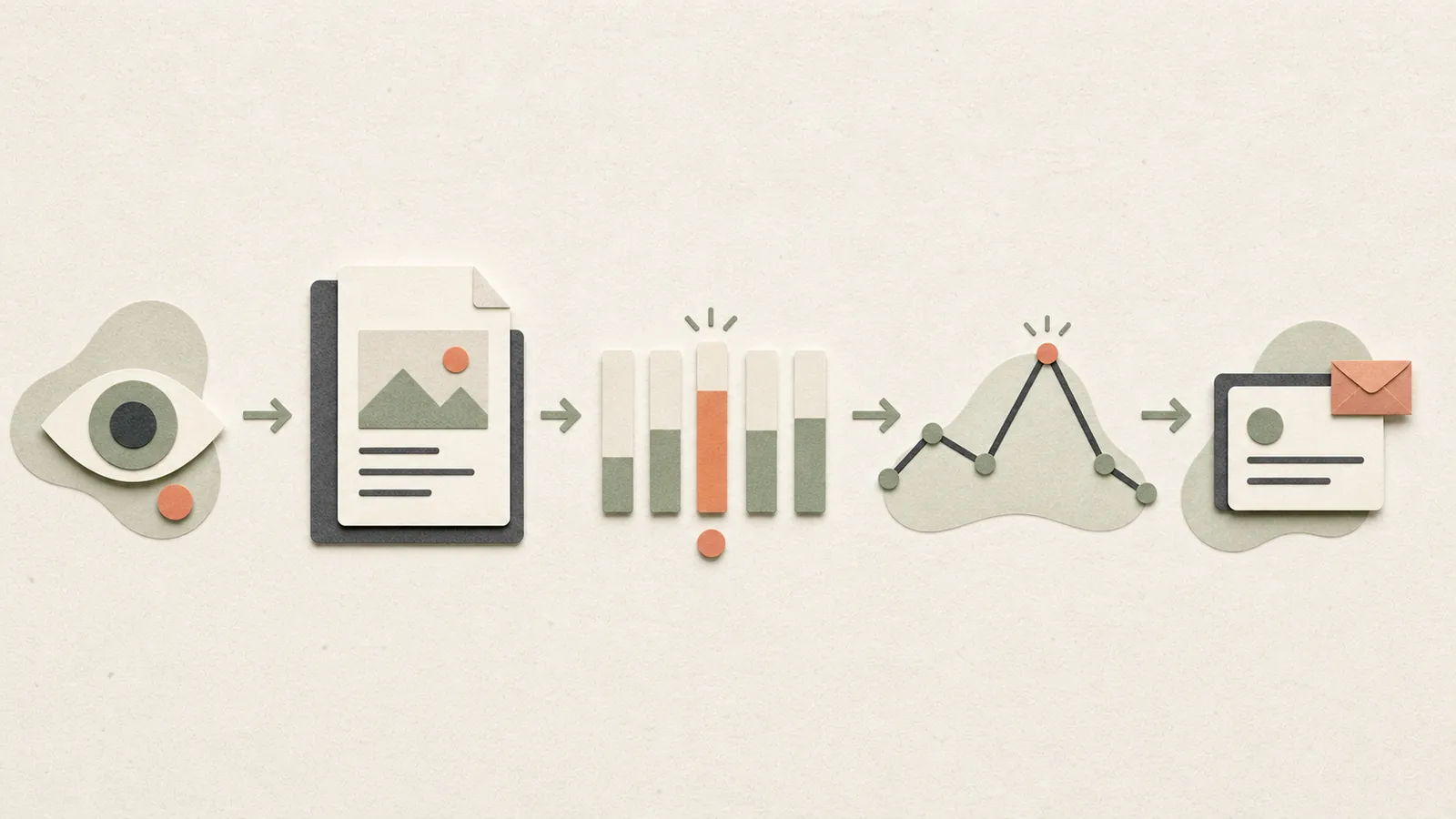
- Synthesizing what an investor engaged with across a deck without you re-reading every page
- Surfacing which conversations are heating up versus going cold
- Turning raw view data into something you can act on instead of just a number that went up
- Pulling context together across multiple documents, not just one link at a time
If a tool only gives you a chat window that summarizes the page you’re already looking at, that’s not saving you work. It’s a shortcut to work you still have to do.
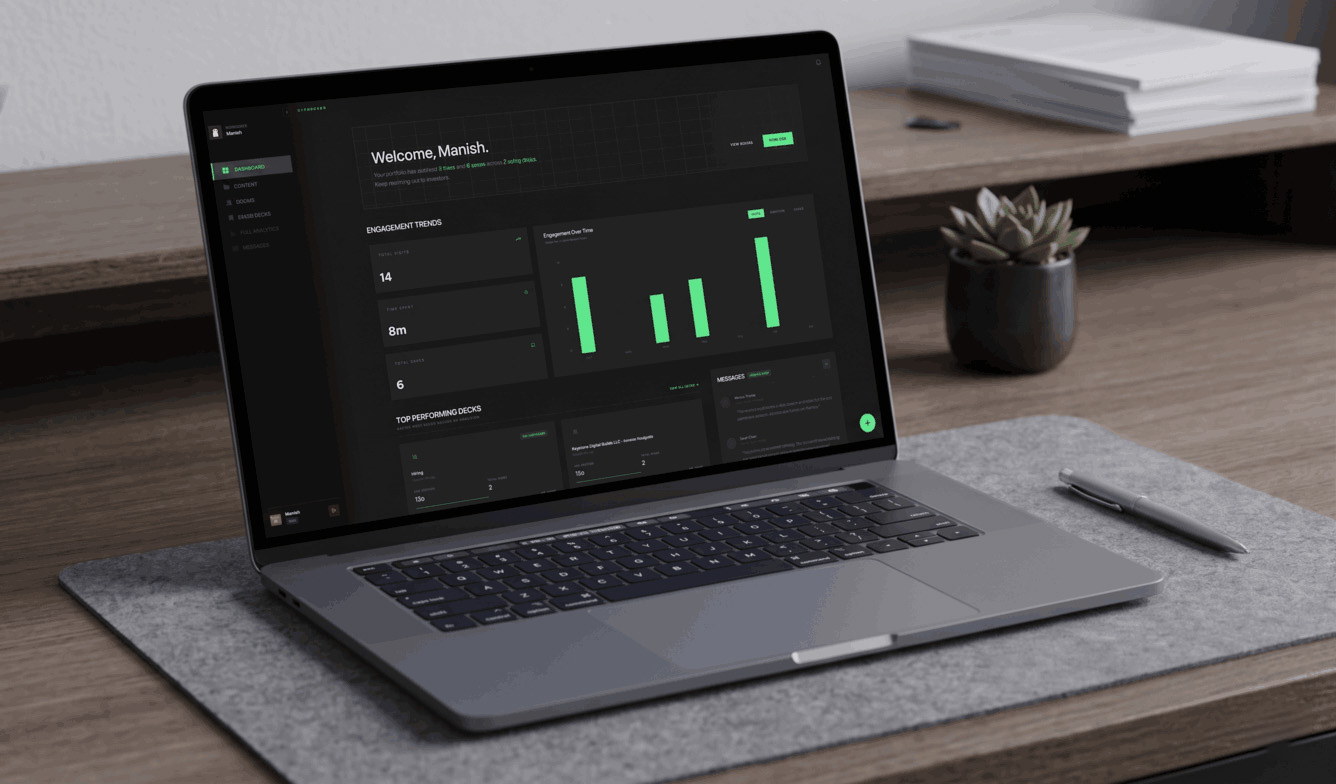
That’s the gap we built Deckly’s investor-side AI summaries to close — not a feature added to an existing tool years after the fact, but something built into the product from the start, specifically for the job of understanding investor engagement quickly during a raise, not synthesizing a decade-old analytics table after the fact. It sits alongside the rest of the fundraising workspace: page-by-page pitch deck analytics, data rooms, and investor follow-up in one place. See how it compares on the DocSend alternative landing page.
DocSend still works, and it isn’t going anywhere. But it’s worth being clear-eyed about which company is actually investing in its future — and whether that future looks like the tool you need for the next few months of your raise.
What to do instead
- Decide what the tool needs to tell you, not just what it tracks. “Investor opened slide 7 three times” is more useful than a visit count.
- Ask whether the AI reads across your documents or just summarizes the one in front of you.
- Model the cost of the tool against the actual length of your raise. DocSend pricing climbs quickly once you add seats, and it’s worth checking what you’re actually paying for.
- Check whether the company building the tool is investing in the product you rely on, or in a sibling product you don’t use.
For a full breakdown of the category, see Best DocSend Alternatives for Startups in 2026 and DocSend vs Papermark vs Deckly.
FAQ
Does DocSend have AI features?
DocSend’s headline update for 2026 was a Diligence Tracker for Advanced Data Rooms, a task management system for structured due diligence. It is not an AI document intelligence feature. DocSend has not shipped AI-native summaries or engagement synthesis as of mid-2026.
Is DocSend stopping development?
No. DocSend still ships updates, and the Diligence Tracker is a real addition. The point is where the investment sits: Dropbox’s AI energy goes into Dash, while DocSend receives more incremental updates.
What is the difference between bolted-on AI and AI-native?
Bolted-on AI means summarization or search added on top of a workflow designed before generative AI existed. AI-native means the analysis is part of the workflow: a deck gets summarized on upload, and engagement patterns get synthesized automatically instead of appearing as a raw analytics table.
What should founders look for in an AI pitch deck tool?
Look for whether the AI does work that matters to your raise: synthesizing investor engagement across a deck, surfacing which conversations are heating up versus going cold, and turning raw view data into something you can act on — not just a chat window on top of an existing product.